


Choosing the right glass for your windows and doors involves more than appearance. You'll also want to think about how well it resists damage, what happens if it breaks and how much protection it offers against intruders.
Two popular options are toughened glass and laminated glass. Both are types of safety glass, but they behave quite differently under pressure. So, which is best for your property?
In this guide, we'll compare toughened glass versus laminated glass, looking at their strength, safety, security and everyday uses to help you make an informed choice.
What Is Toughened Glass?
Toughened glass, also called tempered glass, is specially treated to make it stronger than ordinary glass. During manufacturing, the glass is heated to a high temperature and then rapidly cooled. This creates internal stresses that increase its resistance to impact and bending.
Toughened glass can be up to five times stronger than standard annealed glass of the same thickness. It's commonly used in windows, glazed doors, shower screens and other areas where safety is a priority.
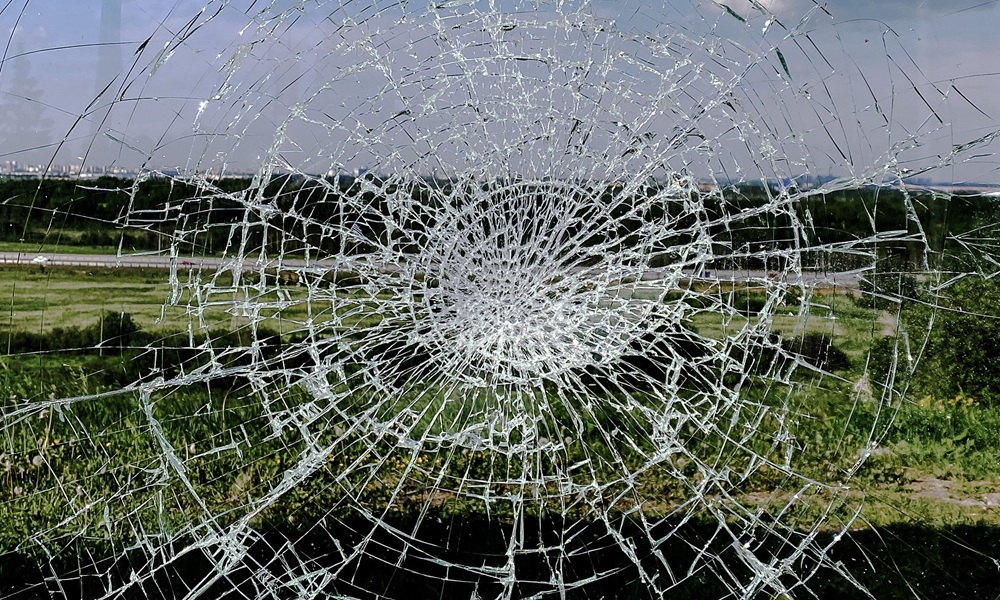
One of its main benefits is how it breaks. Rather than producing large, sharp shards, toughened glass shatters into smaller, relatively blunt pieces, reducing the likelihood of serious cuts.
What Is Laminated Glass?
Laminated glass is made by bonding two or more sheets of glass together with a transparent interlayer, usually polyvinyl butyral (PVB). This interlayer holds the glass together if it's damaged, helping prevent pieces from falling away or leaving a large opening.
Laminated glass is particularly useful for security windows and doors because it can remain an effective barrier even after the glass has cracked. Different thicknesses, glass types and interlayers can be combined to achieve specific levels of safety, security and sound insulation.
Toughened Glass vs Laminated Glass: Key Differences
Although both materials are designed with safety in mind, their properties differ considerably.
- Strength: Toughened glass has greater resistance to bending and impact than ordinary glass of the same thickness.
- Breakage: Toughened glass shatters into small fragments, while laminated glass generally remains held together by its interlayer.
- Security: Laminated glass can resist penetration after impact, making suitable security-rated versions preferable where forced entry is a concern.
- Noise reduction: Laminated glass, particularly acoustic laminated glass, can offer better sound insulation.
- Cost: Laminated glass is often more expensive than basic toughened glass, although prices depend on the specification.
The right option depends on where the glass will be installed and what you need it to do.
Which Is Stronger: Toughened or Laminated Glass?
The answer depends on how you define strength.
If you're comparing individual glass panes of the same thickness, toughened glass generally offers greater resistance to bending and impact than ordinary annealed glass. However, laminated glass performs differently because of its layered construction. Although the individual panes may crack under impact, the interlayer helps hold everything together.
For example, a toughened pane may withstand a substantial blow without breaking. But once it fails, the entire pane can shatter. A suitable laminated security pane may crack sooner, depending on its construction, but remain in place and continue resisting penetration. For protection against forced entry, this ability to remain intact can be especially useful.
What Happens When Toughened Glass Breaks?
Toughened glass is designed to fracture into many small, granular pieces. This makes it safer than ordinary glass, which can break into dangerous, jagged shards. However, the fragments can still cause injury, so broken glass should always be handled carefully.
One limitation is that when a single pane of toughened glass breaks, it generally loses its ability to act as a barrier. The fragments can fall from the frame, leaving an opening. This is worth considering for external doors and accessible windows where security is a concern.
What Happens When Laminated Glass Breaks?
Laminated glass usually develops cracks across its surface when subjected to a sufficiently strong impact. However, the interlayer bonds the broken pieces together, helping the pane remain within its frame.
This provides two benefits:
- Improved safety: Broken glass fragments are less likely to fall away and cause injury.
- Continued protection: The damaged pane may still resist penetration, making it more difficult to create an opening.
Its performance depends on the glass specification, the interlayer and how securely the glazing is installed. A cracked laminated pane should still be assessed and replaced.
Toughened vs Laminated Glass for Security
For security purposes, laminated glass generally has an advantage over a single pane of toughened glass. Toughened glass can resist substantial impacts, but once shattered, it offers little continuing protection against entry.
Security-rated laminated glass, meanwhile, is designed to resist penetration and can make forced entry considerably more difficult. However, ordinary laminated safety glass shouldn't automatically be considered burglar-resistant. Security glazing can be tested under BS EN 356, which classifies resistance to different forms of attack. The glazing must also work alongside strong frames, appropriate locking systems and secure installation.
Toughened or Laminated Glass for Security Doors?
For glazed security doors, laminated security glass is often the preferred choice because it can continue resisting entry after impact. This is especially relevant for entrance doors with glass panels, where an intruder might attempt to break the glazing to gain access.
Toughened glass can still be useful where impact safety and resistance to everyday damage are priorities. In some cases, toughened and laminated glass are combined within the same glazing system to provide different performance characteristics. For the best protection, the entire door assembly should be assessed rather than judging its security by the glass alone.
Toughened vs Laminated Glass for Windows
Both materials have their place in residential and commercial windows. Toughened glass is commonly used in areas where accidental impact is a concern, including low-level glazing and large glazed openings.
Laminated glass is particularly useful for:
- Ground-floor windows that may be accessible to intruders.
- Windows requiring additional resistance to break-ins.
- Overhead glazing where retaining broken glass is important.
- Properties requiring improved sound insulation.
For higher-security applications, laminated glazing should be selected according to the required resistance rating.
Which Is Better for Noise Reduction?
If reducing outside noise is a priority, laminated glass is often worth considering. Its interlayer can help dampen sound vibrations, particularly when an acoustic interlayer is used.
This makes acoustic laminated glass useful for properties near busy roads, railway lines or other persistent sources of noise. However, the overall sound insulation of a window also depends on glass thickness, the glazing unit, frame construction and installation quality.
Choose Security Windows from Stronghold
The choice between laminated glass vs toughened glass comes down to your property's needs. Toughened glass offers excellent impact resistance and safer breakage, while laminated glass has the added advantage of holding together after damage.
For properties where security is a priority, choosing the right glazing is only part of the picture. At Stronghold, our bespoke Security Windows combine reinforced construction, secure locking systems and impact-resistant glazing to help protect your property without compromising its appearance.
Explore our range of security sash and casement windows, or contact our team to discuss the right option for your home or business.
