



%402x.svg)


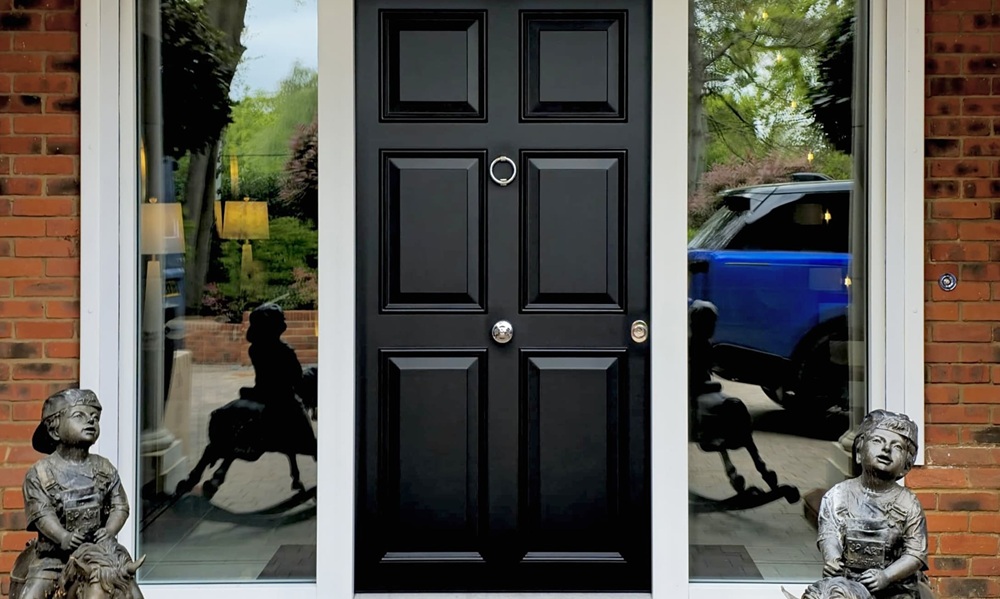
In homes, apartment blocks and commercial buildings, a door can form part of the wider fire strategy, which is where fire door ratings become very relevant.
A fire-rated door is designed to slow the spread of fire and, where specified, smoke. It protects escape routes, gives people more time to leave safely and helps contain fire within one part of a building. The rating shows how long the door resisted fire during recognised testing, provided it is installed and maintained as part of the correct doorset. Understanding fire door rating helps match the door to the risk, building use and regulations.
What is a Fire Door Rating?
A fire door rating is a measure of fire resistance, usually expressed in minutes. Common UK ratings include:
- FD30: tested to provide 30 minutes of fire resistance
- FD60: tested to provide 60 minutes of fire resistance
- FD90: tested to provide 90 minutes of fire resistance
- FD120: tested to provide 120 minutes of fire resistance
These are often called fire door time ratings, because they show how long a doorset has resisted fire under test conditions. A higher number is not automatically better for every building. The right rating depends on where the door is installed and what it protects.
You may also see an “S” added, such as FD30S or FD60S. This indicates smoke control. Smoke can be one of the greatest dangers in a fire, so doors on escape routes, flat entrances, corridors and stairwells may need smoke seals.
Fire Door Ratings Explained: The Whole Doorset Matters
One common misunderstanding around door fire ratings is that the rating belongs only to the door leaf, which is the main outer surface of the door. In reality, a fire door performs as a complete assembly. Performance depends on the door leaf, frame, hinges, locks, latches, closers, intumescent strips, smoke seals, glazing systems, letterplates, viewers and other fitted hardware.
If one part is changed for an unsuitable component, the whole fire performance can be compromised. A door with the wrong hinges, a poor closer or oversized gaps around the frame may not perform as intended. It should be chosen, supplied and fitted with supporting test evidence or certification for the complete doorset.
How are Fire Ratings for Doors Determined?
Fire ratings are determined through controlled testing. The doorset is fitted into a test construction and exposed to severe heat in a furnace. The test measures how well it resists flames and hot gases for a set period.
In the UK, fire doors have traditionally been tested under BS 476-22. European methods, including BS EN 1634-1 and BS EN 13501-2, are also used in fire safety specifications. The process checks whether the construction, frame, seals and hardware work together. A proper specification should be backed by test reports, certification or a clear statement of performance.
What are the Different Types of Fire Door Ratings in the UK?
The ratings most people come across are FD30 and FD60. FD30 doors are widely used in domestic and residential settings, including certain protected routes, integral garage access points and flat entrance doors, depending on the building design and relevant guidance.
FD60 doors are often specified where higher protection is needed, such as certain commercial buildings, plant rooms, service areas, compartment walls or higher-risk locations. FD90 and FD120 doors are less common in everyday residential use but may be required in demanding commercial, industrial or specialist settings.
Some specifications also refer to European classifications such as E30 or E60. “E” relates to integrity, meaning resistance to flames and hot gases. “I” relates to insulation, meaning the ability to limit temperature rise on the unexposed side. A competent fire door specialist should confirm which classification applies.
What are the Fire Door Rating Requirements?
There is no single fire door rating for every property. Requirements depend on building type, layout, height, use, occupancy and fire strategy. Approved Document B provides fire safety guidance for Building Regulations in England, including fire doorsets in compartment walls, protected stairways, corridors and doors between a dwellinghouse and a garage. FD30 or FD30S is referenced in many common situations, while doors in compartment walls separating buildings may need to match the wall’s fire resistance.
For existing buildings, the Regulatory Reform (Fire Safety) Order 2005 places duties on the Responsible Person to manage fire safety risks. In blocks of flats in England, the Fire Safety (England) Regulations 2022 introduced duties around fire door information and routine checks. If a door is part of a fire strategy, its rating should be confirmed by the fire risk assessment, building control requirements, project specification or competent fire safety professional.
How to Choose the Right Fire Door Rating
Choosing the right fire door rating is about the building, not just the product brochure. Before ordering, clarify where the door will be installed, whether it protects an escape route, stairwell, corridor or compartment, whether smoke control is needed, whether it is an internal door, flat entrance door or external security door, and what test evidence or certification is available for the complete doorset.
This is especially important for high-security entrances. A door may need to resist forced entry while meeting a required fire rating. A reinforced security door still needs the correct seals, frame, hardware and installation method to satisfy the fire specification.
Maintenance and Inspection of Fire Doors
A fire door is not a fit-and-forget product. Checks should look for visible damage, excessive gaps, missing or damaged seals, loose hinges, damaged glazing, unsuitable replacement ironmongery, poor closing and signs that the door has been altered without approval.
A fire door must close properly. If it is wedged open, dragging on the floor, failing to latch or sitting badly in the frame, it cannot be relied on to perform as intended. Repairs or replacements should be handled by a competent contractor using compatible components.
A Stronger, Safer Entrance Starts with the Right Specification
Fire protection, security and design should not be treated as separate conversations. Stronghold Security Doors designs and manufactures bespoke, high-performance security doors for properties across the UK. Where fire performance is part of the brief, the specification should be discussed from the start, so the final doorset is built around the correct rating, installation requirements, security performance and finish. Get in touch with us today to discuss your security and fire door needs - we’re here to help!
