



%402x.svg)


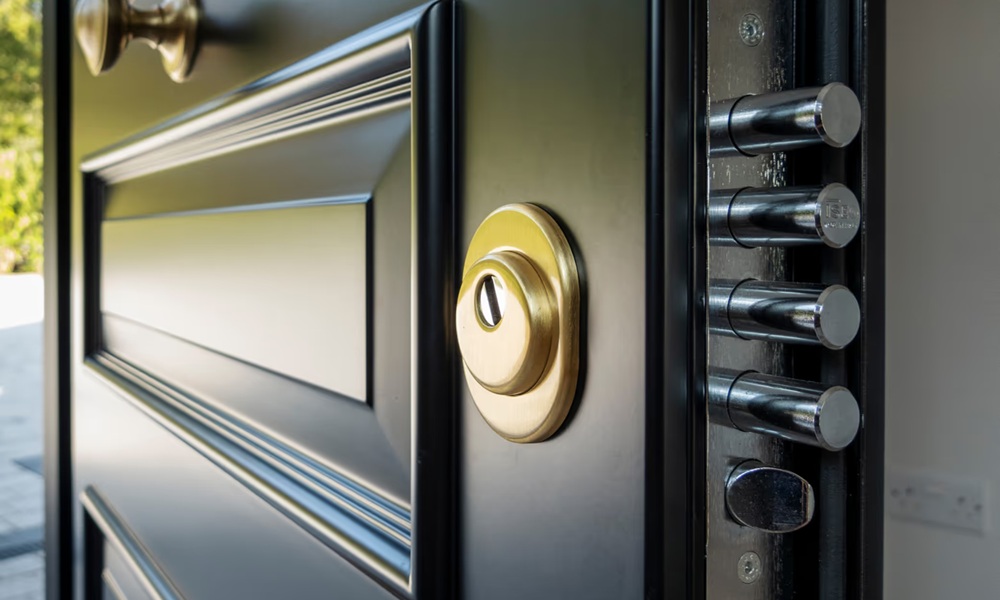
Your front door is only as secure as the parts holding it shut. The frame, hinges, glazing, door leaf and locking system all matter, but the lock is usually the first part people think about. That is where a multipoint door lock can make a clear difference.
A basic lock secures the door at one central point. A multipoint lock secures it at several points along the frame, helping to spread force across the height of the door. For front doors, back doors, patio doors and high-security entrance doors, this gives the door a stronger hold and a more secure feel.
What is a Multipoint Lock?
So, what is a multipoint lock? It is a locking system that fastens the door into the frame at more than one point. Most systems secure the door at the centre, top and bottom, although some also include hooks, bolts, rollers or cams along the locking edge.
You will often find multipoint door locks on uPVC, composite, timber and aluminium doors. They are common on modern external doors because they offer more support than a single lock while still being easy to use every day.
A typical multipoint locking system may include:
- A central latch and deadbolt
- Hook bolts that lock into the frame
- Roller cams or mushroom cams
- Top and bottom locking points
- A euro cylinder or similar key cylinder
- A handle or key mechanism that activates the lock
The exact setup depends on the door material, lock type and level of protection needed.
How Does a Multipoint Door Lock Mechanism Work?
The multipoint door lock mechanism sits inside the locking edge of the door. When activated, several locking points move into keeps fitted within the frame.
On many doors, the user lifts the handle first. This moves the hooks, bolts or rollers into position. The key is then turned to lock everything in place. Once secured, the door is held at several points, rather than relying only on the area around the handle.
Some systems work differently. A key-operated multipoint lock may allow the locking points to be controlled mainly by turning the key. Automatic systems can engage when the door closes, while smart versions may work with keypads, fobs, apps or access control.
In each case, the purpose is the same: to secure the door into the frame at more than one point.
What is a Key-operated Multipoint Lock?
A key-operated lock is a type of multipoint lock where the key controls the locking action. Instead of lifting a handle to throw the locking points, the key operates the mechanism.
This can suit doors where a cleaner or more traditional look is preferred. It can also work well on higher-end entrance doors where the handle design is part of the overall appearance.
A key-operated multipoint lock still gives the benefit of multipoint security, but with a simpler, key-led action.
Benefits of Multipoint Door Locks
A well-fitted multipoint door lock can improve both security and everyday door performance. The main benefit is that it spreads pressure across the door and frame. If someone tries to force or prise the door open, there is resistance at several points.
Other benefits can include:
- Better contact between the door and frame
- Improved weather sealing on some doors
- Less rattling or movement when closed
- One-key operation on many systems
- A more solid feel when the door shuts
- Good compatibility with many modern external doors
For homeowners, the appeal is simple. A multipoint locking system gives the entrance more than one line of defence. It can also make the door feel sturdier, which is often noticeable as soon as the door closes.
Types of Multipoint Door Locks
There are several types of multipoint door locks, and the right choice depends on the door, frame, material and security requirements.
Lever-operated Multipoint Locks
These are common on uPVC and composite doors. The handle is lifted to engage the locking points, then the key is turned to secure the door.
Key-operated Multipoint Locks
A key-operated multipoint lock uses the key to control the locking action. This can suit front doors where the homeowner wants strong locking without a standard lift-handle setup.
Automatic Multipoint Locks
These engage when the door closes. Depending on the system, the door may still need to be deadlocked with a key or thumbturn.
Smart Multipoint Locks
Smart systems combine a multipoint door lock mechanism with electronic access, such as app control, keypad entry, fobs or biometric access. The mechanical lock still needs to be strong and well-matched to the door.
Read more about smart locks.
Multipoint Lock Features to Consider
Not every multipoint lock offers the same level of protection. The mechanism, cylinder, keeps, frame and door construction all matter.
Key features to look at include:
- Locking points: Check how many points secure into the frame and where they sit.
- Cylinder quality: Many multipoint door locks use a euro cylinder, which should resist snapping, drilling, picking and bumping.
- Door and frame strength: A strong lock needs a solid door and frame to perform well.
- Ease of use: The lock should operate smoothly, without stiffness or confusion.
- Maintenance: Doors can settle over time, so regular checks help keep the system working correctly.
Is a Multipoint Lock Enough on Its Own?
A multipoint lock is a strong part of door security, but it should not be viewed alone. Real protection comes from the full door set: the door leaf, reinforced core, frame, hinges, glazing, locks, cylinders and installation.
This is especially important for high-security doors. A strong lock fitted into a weak door or poor frame will only go so far. The multipoint locking system needs to work with the rest of the entrance.
Multipoint Locks and Stronghold Security Doors
At Stronghold, locking is considered part of the full entrance design. A door should look right for the property, but it also needs to perform when it matters. That means choosing the right materials, frame, hardware and multipoint locking system for the setting.
As standard, Stronghold doors include a high-security multi-directional locking system designed for strength and reliability:
- 4 shootbolts and latch on the lock side/lever side
- 1 top bolt locking into a reinforced metal frame
- 1 bottom shootbolt locking into a metal threshold
- Minimum of 4 non-moving shootbolts on the hinge side, interlocking when the door closes
- Total of 10 locking points as standard, providing 4-directional security
In addition, clients can specify optional 3-bolt locking systems positioned anywhere along the lock side. These can be operated by the same main key or configured with different keys, depending on security and access requirements.
So, what is a multipoint lock? It is a system that secures a door at several points along the frame, giving the entrance more support than a single lock. When matched with a well-made door and frame, a multipoint door lock can help create a safer, stronger and more reassuring entrance.
Explore Stronghold’s security doors range to see how high-quality design and serious protection can work together, or contact us for more information.
